
Subscribe

RSS Feed (xml)

Powered By

Skin Design:
Free Blogger Skins

Powered by Blogger

International Biodiversity Conference in Jayapura, Papua - Indonesia, 11-14 November 2009, The First International Conference in Jayapura, Papua - Indonesia with theme " Working together for sustainable development in Tanah Papua for our future " sub theme “Protect Biodiversity, Protect our Life”. Ayo Kita Sukseskan Acara Konferensi Bertaraf International Tentang Keragaman Hayati Papua di Jayapura, Papua. Tema Acara " Bekerja bersama-sama bagi pembangunan berkelanjutan di Tanah Papua demi masa depan kita " Acara ini terlaksana atas kerjasama Pemda Provinsi Papua, Pemda Provinsi Papua Barat, Conservation International Indonesia dan WWF Indonesia Region Sahul Papua

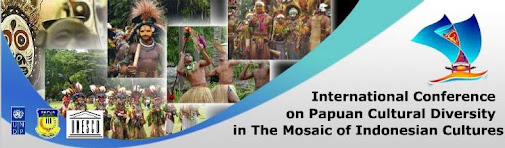
AYO KITA DUKUNG : KONFERENSI INTERNASIONAL KERAGAMAN BUDAYA PAPUA, 8-11 NOPEMBER 2010

AYO KITA DUKUNG : KONFERENSI INTERNASIONAL KERAGAMAN BUDAYA PAPUA, 8-11 NOPEMBER 2010
Akan diselenggarakan Konferensi Internasional Kedua di Jayapura, Papua - Indonesia tentang "Konferensi Internasional Keragaman Budaya Papua dalam Keragaman Kebudayaan Indonesia " tanggal 8-11 Nopember 2010 bertempat di Kantor Gubernur Provinsi Papua, Jln.Soa Siu, Jayapura-Papua. Bagi Anda yang tertarik mengetahui informasinya dan ingin ikut serta pada acara tersebut silahkan kunjungi Website di www.icpcd.org


Sabtu, 29 Agustus 2009

Abstract : Pemantauan Migrasi Penyu yang bertelur di Bentang Laut Kepala Burung Papua Barat, by Barnabas Wurlianty

Pemantauan Migrasi Penyu yang bertelur di Bentang Laut Kepala Burung Papua Barat
by Barnabas Wurlianty (WWF-Indonesia,Sahul Region)

Pantai utara Kepala Burung Papua Barat dan beberapa pulau di Kabupaten Raja Ampat merupakan lokasi peneluran yang cukup besar untuk beberpa jenis penyu. Pulau Piai dan Pulau sayang di Kabupaten Raja Ampat merupakan tempat peneluran dari Penyu Hijau (Green Turtle), beberapa pantai di pulau-pulau kecil selatan Pulau Misool di bagian selatan Kabupaten Raja Ampat juga merupakan tempat peneluran Penyu Hijau (Green Tutle). Sedangkan di pantai utara Papua Barat terdapat dua pantai tempat peneluran terbesar Penyu Belimbing (Latherback Turtle) di Pasifik yaitu pantai jamursba Medi dan pantai Warmon.

Kemudian di pantai Utara Kabupaten manokwari tepatnya di Distrik Sidey terdapat pantai peneluran Penyu yang cukup panjang untuk jenis Penyu Lekang (Olive Ridle). Akan tetapi hamper semua pantai di utara Kepala Burung dan pulau2 di Raja Ampat merupakan tempat peneluran berbagai jenis penyu yang ada dengan tingkat keterancaman yang cukup tinggi baik di habitat peneluran maupun di perairan laut tempat penyu tersebut makan dan bermigrasi. Untuk mengetahui habitat2 lain dari penyu selain di pantai peneluran seperti lokasi makan, jalur migrasi, kelompok populasi, maka dilakukan studi migrasi dengan pemasangan Transmiter pada penyu yang datang bertelur di berbagai pantai peneluran dan pengambilan sampel kulit untuk analisa DNA dari penyu2 tersebut.

Pemantauan terhadap pola migrasi penyu dan analisa DNA di Papua dimulai dengan suatu kerjasama antara WWF Indonesia Sahul Program dengan NOAA Amerika. Kerjasama ini terfokus pada pemantauan populasi dipantai peneluran, pola migrasi dan analisis DNA dari penyu belimbing (Leatherback Turtle) di pantai peneluran Jamursbamedi dan Warmon yang dimulai pada tahun 2001. Kerjasama ini menghasilkan satu kesepakatan bersama antara 3 negara yaitu Indonesia, Papua New Guinea dan Solomon untuk melakukan pemantauan bersama terhadap Penyu Belimbing (Leatherback Turtle) pada kawasan yang cukup besar yang disebut dengan Bismark Solomon Sea Ecoregion.

Terbentuknya Bismark Solomon Sea Ecoregion tersebut berdasarkan hasil pemantauan pola migrasi dan analisis DNA dari penyu belimbing (Leatherback Turtle) yang bertelur di Pantai Utara Papua Barat, PNG dan Solomon Island, dimana dari hasil analisa menyatakan bahwa penyu belimbing (Leatherback Turtle) yang bertelur di 3 negara tersebut adalah penyu dari kelompok populasi yang sama yang bertelur di ketiga Negara tersebut. Dari pemantauan pola migrasi dapat diketahui juga bahwa lokasi makan dari penyu Belimbing tersebut berada sekitar lokasi pantai peneluran di Papua Barat (Pantai Warmon), PNG dan Solomon Island sampai ke pantai Timur Australia dan Kepulauan Kei (perairan Kei Kecil Barat). Sedangkan Penyu Belimbing yang bertelur di Pantai Jamursba Medi lokasi makannya berada di teluk Monteray Kalifornia Amerika Serikat.

Pemantauan yang sama terhadap pola migrasi dan analisis DNA dilakukan juga terhadap penyu hijau (Green Turtle) dan penyu lekang (Olive Ridle). Pemantauan pola migrasi dari Penyu Hijau telah dilakukan sejak tahun 2005 – 2007 dengan pemasangan 7 transmiter pada 7 ekor penyu hijau yang bertelur di Pulau Piai (Raja Ampat) yang dilakukan oleh Yayasan Penyu Papua. Dari hasil pemantauan ternyata sebagian besar penyu tersebut setelah bertelur bermigrasi kearah selatan sampai ke Kepulauan Kei dan Aru, dan ada juga bermigrasi sampai ke pantai selatan Pulau Kalimantan. Pemantauan lainnya terhadap penyu hijau dan penyu lekang dilakukan juga WWF dalam Program EBM. Dalam program EBM ini, dilakukan kerjasama antara WWF Indonesia dengan Universitas Udayana Bali.

Sebagai tindak lanjut program EBM di Papua Barat, dilakukan pemasangan 4 buah transmiter di Pantai Utara Kepala Burung Papua Barat dan Pulau Misool. Satu (1) buah transmiter dipasang pada penyu lekang (Olive Ridle) yang bertelur di pantai jamursba Medi, 2 buah transmiter dipasang pada penyu lekang (olive Ridle) yang bertelur di pantai utara kabupaten Manokwari, dan 1 buah transmiter dipasang pada penyu hijau (Green Turtle) di pulau Misool. Hasil pemantauan menunjukan bahwa selesai bertelur pada lokasi2 diatas, penyu2 tersebut bermigrasi kearah selatan terutama ke kepulauan Kei dan Aru.

Abstract : Ecology of Papua

Ecology, Biogeography, and Environment of Papua

By Bruce M. Beehler, Conservation International

Abstract
Papua supports the largest tract of equatorial forest wilderness remaining in Asia. Mountains define Papuan geography. The highest (snow-capped) peak of Papua is Puncak Jayakusuma or Puncak Jaya (4,884 m). Papua is estimated to house more than 15,000 species of vascular plants. Birds dominate the Papuan vertebrate fauna, with more than 600 species recorded. This includes more than 25 species of birds of paradise, three species of cassowaries, and some two dozen each of parrots, pigeons, raptors, and kingfishers.

The mammals are less in evidence, but include fruit-bats, insectivorous bats, tree kangaroos, possums, and rats among the 180 or so mammalian species. Amphibians include more than 130 species of frogs, many still undescribed to science. Reptiles include two crocodiles, 83 snakes, and 141 lizards. The fishes comprise ca 400 freshwater species and more than 2,250 marine taxa (about 1,500 of which inhabit coral reef ecosystems. There are probably in excess of 100,000 species of insects alone in Papua, only a fraction of these having been catalogued. As with Papua New Guinea, Papua is home to many traditional cultures—250 by one estimate. Many of Papua’s language groups are small and insular, with fewer than 1,000 speakers.

Papua is a land in flux. Significant chronic disturbance is produced by periodic vulcanism, human-caused and naturally-occurring fire regimes, plus El NiƱo drought.
Tanah Papua is immensely valuable to the global environment because it supports large expanses of unbroken natural forest and large intact marine ecosystems. Papua should thus be developed with care and planning. The earth benefits from the existence of Papua’s vast old growth forests—these produce abundant clean water for drinking; rich soils for subsistence gardens; timber and fiber for subsistence economies; and large natural ecosystems that stabilize regional weather systems and mitigate climate change. We should not lose sight of the importance of ecosystem services in tropical forest ecosystems. These supply much of the earth’s fresh water, which is growing scarce. Moreover, wild nature becomes increasingly valuable to an ever-more crowded and urbanized world. The rich developed countries and the large industries should be investing in these natural assets in the same way we want them to invest in carbon sequestration and REDD.

A rational and sustainable development regime for Papua will focus development nearest to the markets (on the coasts), and where infrastructure already exists (coastal urban centers). Road networks should be concentrated where the infrastructure lies already. Spending public funds to open up interior wilderness areas is not economically sound. A “smart” plan for developing Papua would keep the interior wild lands in large blocks rather than dissecting and degrading them. It would ensure the survival of Papua’s wildlife riches and ecosystem services, which are important to the traditional forest peoples of Papua. And it would balance intensive development in the urban areas against conservation in the wild lands in the interior. After all, Papua’s wilderness and its indigenous forest peoples make Papua unique. Keeping Papua unique culturally and environmentally will prove a winner in decades to come.

Abstract : Spatial Planning for Biodiversity Conservation in Papua

Spatial Planning for Biodiversity Conservation in Papua :
Laying the foundation for people-centered development that safeguards high biological and cultural diversity

by Drs. Alex Rumaseb, MM, Head of Regional Planning Agency (Bappeda), Papua Province, Indonesia

Abstract
Papua Province has adopted an innovative self-reliant (swakelola) and participative approach for spatial planning by the regional planning agency or Bappeda as the framer of the provincial spatial plan with biodiversity conservation as a central feature. In support of the self-reliant approach, technical assistance from Environmental Services Program (ESP) funded by the United States Agency for International Development (USAID) and from the United Kingdom’s Foreign and Commonwealth Office (FCO) has been embedded in the spatial planning unit of Bappeda. This self-reliant and inclusive provincial spatial planning process in Papua has rested on the following five development pillars, (a) Embedded support for self-reliant (swakelola) spatial planning, (b) strong and dynamic inter-institutional linkages, (c) building capacity and contributing to key outputs in the spatial planning process, (d) transparent, iterative and participative facts and analysis preparation and reporting that is consistent with Strategic Environmental Assessment (SEA) mandated for all spatial planning in Indonesia, (e) Building a legacy for sustainable spatial planning at the District and village levels.

To date, among the major highlights of the spatial planning process have been maps for (1) rationalization and harmonization of forest functions, (2) geo-location of villages and language groups, (3) integrated transport system networks, and (4) proposed rationalization of inter-district boundaries. Bappeda’s swakelola spatial planning approach, guided by principles of transparency, participation and accountability is true to the local saying about the importance of shared ownership, ko punya, sa punya, tong sama sama punya (you own it, i own it, therefore we both own it) promising a plan that while not perfect should be far better than before and far more likely to be respected by policy-makers, decision-makers, planners, investors, indeed the entire community of masyarakat Papua. Although well advanced, Papua’s spatial planning process remains a work in progress with a number of challenges ahead to provide enduring safeguards and guidance for biodiversity conservation. These remaining challenges occur relate to tasks facing the various administrative levels involved in developing spatial plans not just for Papua province, its Districts and villages but also the whole of Indonesia.

List of Contents
1. Introduction ........................................................................................................ 1
The Role of Spatial Planning in Effective Biodiversity Conservation ........................... 1
Governor’s Commitments to Conserving Biodiversity and Cultural Diversity ............... 1
A Special Role for the People of Papua .................................................................... 1
Structure of this Paper ............................................................................................ 2


2. Challenges for Spatial Planning in Papua Province Related to Biodiversity Conservation 2
A Spatial Plan that Underpins Papua Province’s Overarching Vision and Mission ....... 2

3. Innovative Self-reliant and Participative Spatial Planning ............................. 3

4. Five Development Pillars for Spatial Planning ................................................. 4

(1) Embedded Technical Support for Self-Reliant (Swakelola) Spatial Planning ..... 4

Demand-driven Identification and Management of Technical Support ......... 4
GIS Spatial Planning Laboratory ................................................................... 5
Tim Teknis .................................................................................................. 5


(2) Effective and Dynamic Inter-institutional Linkages to Ensure Adequate Communication of Ideas, Information and Reactions among Stakeholders .............................................. 6

(3) Capacity-Building for Spatial Planning Process as well as and Technical Contributions to the Framing of the Spatial Plan .............................................................................. 7

(4) Participative, Transparent and Iterative Preparation of the Facts and Analysis Report Consistent with Strategic Environmental Assessment (SEA) to Inform the Spatial Planning Process 8

(5) Continuous Improvement by Learning Lessons from Preparation of the Provincial Spatial Plan to Ensure a Legacy of Sustainability After the Spatial Plan is Legally Constituted .. 9

On-going Lessons-Learned Process ............................................................. 9

5. Highlights of Spatial Planning Outputs for Papua Province ........................... 10

6. Conclusion : Shared Ownership of Spatial Planning ............................................... 11

7. POST-SCRIPT : What Remains to Be Done for the Spatial Planning to become an Enduring Safeguard of Biological and Cultural Diversity in Papua Province ? ................................................. 11

Bibliography ................................................................................................................. 12
Maps ............................................................................................................................ 14


Abstract Paper : Ethnobotany of Piper spp and species diversity of the Piper plants in Papua

Ethnobotany of Piper spp and species diversity of the Piper plants in Papua
By Konstantina M.B Kameubun (1), Michael Muehlenberg(2)

1) Biology Education, Faculty of Teacher Training and Education, Cenderawasih University (UNCEN), Jayapura, Papua

Email: brigitabio@yahoo.co.id, kkameub@gwdg.de
2) Department of Conservation Biology, Georg-August University Goettingen, Germany
Email: mmuehle@uni-goettingen.de


Abstract
Study of the ethnobotany of Piper species and diversity was carried out in five areas in Papua: Jayapura, Merauke, Mamberamo, Wamena, and Raja Ampat. The aim of the study is to inventory the species of the genus Piper in Papua, to find local community knowledge about the use, the conservation, and the cultivation of Piper in Papua.

By own field surveys and interviews with the local communities in the different regions of Papua 18 species of Piper could be recorded. It is expected that the number of original species of Piper plants in Papua will increase if the survey area is extended. Three species are introduced, 9 species are used by the people in Papua and 1 species serves as a foodplant for fruit-eating birds.

The Papuan community uses Piper plants for medicines, foodstuffs, dowry, drink ingredients, spices, and as ornamental plants. Both, Piper methysticum Forst. and Piper betle L. , are cultivated by local communities and show a variation at the species level. The taxonomic status and the genetic structure of the two species (P. methysticum and P. betle) are investigated by genetics analyses using the methods of Microsatellite and AFLP.


Key words: Ethnobotany, Piper, diversity, Papua

Abstract : Climate change and possible contribution from Papua to prevent global disaster by Prof. Dr. Emil Salim


Abstract : Climate Risk Profile for Papua and Papua Barat

Climate Risk Profile for Papua and Papua Barat
By Terry Hills - Technical Advisor (Climate Change Adaption)
Conservation International


Abstract

Climate change is a global problem with local impacts – we need to ’avoid the unmanageable’ by making contributions to the global effort to stabilize greenhouse gas concentrations in the atmosphere, but also ‘manage the unavoidable’ by understanding the likely local impacts of climate change and taking action to help ‘climate-proof’ economic development and livelihoods.

This paper seeks to support development and conservation decision-makers in Papua and Papua Barat to make the best use of available information on climate risk as part of their decision-making – taking steps to ‘manage the unavoidable’. It includes an overview of the likely changes to temperature, precipitation, ocean acidity, sea level rise and climate-related extreme events for the Papuan provinces.

In addition, the paper outlines the broad levels of uncertainty associated with these climate projections to facilitate decision-making that weighs the cost of building climate resilience into planning decisions against the risk of inaction. Additionally, approaches that will reduce the risk profile of climate-sensitive investment decisions are described, supporting the identification of solutions for application at various scales in areas of high potential vulnerability.

Finally, the potential of ecosystem-based adaptation (EbA) is suggested as an important part of these climate solutions in the Papuan provinces. EbA aims to build climate-proof development outcomes by using the potential for ecosystems to act as a ‘bio-shield’ for climate change.

Full Paper download here

Kamis, 27 Agustus 2009

Abstract From Young Scientist : The Physiological Response Of Grafted Sweet Potato Plants Under Water Limited Conditions

By: Saraswati Prabawardani
Faculty of Agriculture and Agriculture Technique Papua State University

In the highland areas of Papua, drought and frost are the major problems for sweet potato production. Drought and frost occur yearly and devastate crops, threatening the lives of the people in the area. Due to the effect of El NiƱo, prolonged and severe drought occurred in 1997. As a consequence, many sweet potato crops died and lost (Prain and Widyastuti, 1998; Ballard, 1999).

Improvement of plant productivity under water stress needs an understanding of physiological mechanisms by which water stress affects plant growth. Sexual breeding strategies have not been very effective, as incompatibility is common in the sweet potato. Traditionally, farmers have selected seedlings from natural (segregating) populations, for specific traits, as sexual breeding is long-term job requiring a lot of resources and has often been unsuccessful for sweet potato. Grafting may offer a short-term solution by combining the desirable characteristics of different cultivars into one plant. Objective of the study was to observe the physiological aspects of rootstocks and scions from both drought tolerant and susceptible sweet potato cultivars under water limited conditions.

Results showed that grafting between two cultivars with compatible scions and rootstocks is possible. The compatibility of the grafted combination between a Lole scion grafted and a Wanmun rootstock fulfils the criterion for a drought tolerant strategy and good storage root yields under water stress conditions. The ability of this grafted combination to produce high tuber yields was associated with low rate of transpiration and high water-use efficiency. In addition, compatibility and good alignment across the grafted union provided ready movement of assimilates from leaves, and easy transport of water and inorganic substances from roots. Grafting of appropriate sweet potato materials allows the option of new farming systems to be developed so that the indigenous people of drought-prone environments, where sweet potato is the staple diet, can use the benefits to flow from the results of the present study.